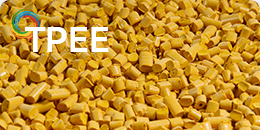
Thermoplastic rubber is a new type of material that can be plasticized at high temperature and can show rubber elasticity at low temperature.
Such materials have the processing and forming characteristics of thermoplastics and the rubber elastic properties of vulcanized rubber. The intertransition between these two physical states is not only dependent on temperature changes, but also reversible.
Thermoplastic rubber appeared in the early 1950s. Now the thermoplastic rubber at home and abroad has developed very rapidly, and a new system has been formed in the rubber material, which is called "the third generation rubber".
There are many types of thermoplastic rubbers. At present, according to their chemical composition, they can be roughly divided into six categories:
1. Polyurethane
This kind of thermoplastic rubber developed earlier, and its output is also larger.
2. Styrene
This type of thermoplastic rubber is currently the fastest growing, and its manufacturing process is relatively mature. Its types include thermoplastic styrene-butadiene copolymer, thermoplastic styrene-isoprene copolymer, thermoplastic styrene-butadiene-benzene Ethylene block copolymers, etc.
3. Polyester
For this type of thermoplastic rubber, the rigid chain of the molecular structure is polyester, and the flexible chain is polyether.
4. Polyolefins
This is a newly developed type, and the current application is to prepare this kind of thermoplastic rubber by blending. There are physical blending type, reactor type, dynamic vulcanization type.
5. Polysiloxane
In the molecular structure of this kind of thermoplastic rubber, polysiloxane is used as a flexible chain, and polyolefin or aromatic olefin, polyaryl ether, polyester, polycarbonate, etc. are used as rigid chain block copolymers, or different silicones. Block copolymers of alkylene oxides.
6. Other categories
Such thermoplastic rubbers include blended or grafted thermoplastic natural rubber, syndiotactic 1,2-polybutadiene resin, complex ionomer copolymer and thermoplastic fluororubber.
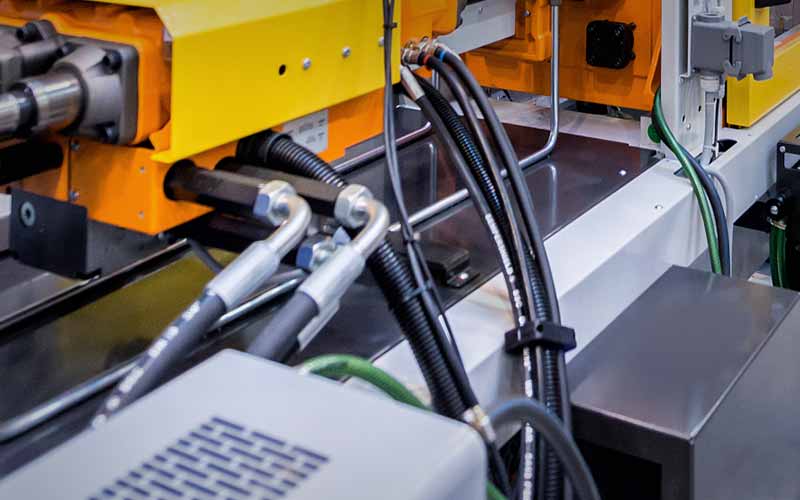
Thermoplastic rubber can be injection-molded with an injection machine used in the ordinary plastics industry, or it can be molded by molding or processed by other plastic molding methods.
It can be used to manufacture various rubber products, hot melt adhesives and adhesives other than tires, and can also be used as a toughening modifier for various plastics. General-purpose SBS is often used to manufacture all kinds of high-grade rubber shoes, automobile rubber accessories and hoses.
Polyurethane thermoplastic rubber is widely used in the manufacture of special rubber products in addition to the manufacture of outsole and heel, especially advanced sports shoes, work shoes and transmission belts and conveyor belts. Cable insulation and hoses, tape seals, gaskets, etc.; polyester thermoplastic rubber can be used to manufacture hydraulic hoses, pipeline coverings, transmission belts, etc.