In the world of polymer materials, structure dictates performance. TPO, as a composite material with both rigidity and flexibility, is widely used in automobiles, construction, medical devices, and appliances. Its excellence stems from its unique chemical structure.
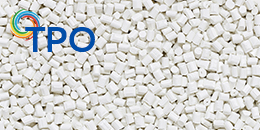
TPO is a type of polymer material formed by blending a polyolefin matrix (such as polypropylene PP or polyethylene PE) with an elastomer (such as ethylene-propylene-diene monomer rubber EPDM). It combines the processability of thermoplastics with the elasticity of rubber, making it an important branch of the thermoplastic elastomer (TPE) family.
From a molecular perspective, TPO is not a single compound but a physical blend. Its chemical structure mainly includes two parts:
The "hard" part of TPO is usually composed of polypropylene (PP) or polyethylene (PE). These polyolefins have neatly arranged polymer chains that form crystalline regions at the molecular level.
These crystalline regions provide mechanical strength, heat resistance, and structural stability, allowing TPO to maintain its shape during thermoforming and injection molding processes.
In TPO, the elastomeric component, most commonly EPDM rubber (ethylene-propylene-diene copolymer), has a non-crystalline, randomly arranged polymer chain structure.
These random chains confer excellent elasticity, impact resistance, and low-temperature flexibility to TPO, enabling it to remain soft and durable under dynamic loads.
This "two-phase structure" endows TPO with multiple advantages:
High Adjustability: By altering the ratio of polyolefin to rubber, the hardness, elasticity, melting point, and other properties of TPO can be flexibly controlled to meet various application requirements.
Physical Blending, Non-Chemical Cross-Linking: Unlike vulcanized rubber, TPO does not require chemical cross-linking. Therefore, it can be thermally processed multiple times, making it highly recyclable.
Non-Polar Structure, Chemical Resistance: TPO lacks polar groups, making it resistant to most acids, bases, oils, and salt sprays. This makes it particularly suitable for automotive exterior and building waterproofing applications.
It is this "hard-soft" blending structure that allows TPO to excel in various applications:
Automotive Bumpers and Interior Parts: These require both shape strength and the ability to avoid shattering upon impact.
Roof Waterproofing Membranes: These need to be UV resistant, heat resistant, and have lasting elasticity.
Flexible Cable Sheaths: These need to be both wear-resistant and easy to bend, making TPO the perfect choice.