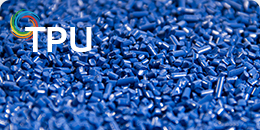
TPU cable, also known as thermoplastic polyurethane cable, is one of the newest cable types in the market. Technically, they are thermoplastic elastomers composed of linear segmented copolymers consisting of hard segments and soft segments. TPU is a strong and durable synthetic polymer, making it an excellent choice for cables. This blog will outline TPU cables, their applications, characteristics, and some key considerations when purchasing them.
Now the question arises, how does TPU (thermoplastic polyurethane) cable serve these industries? It is a melt-processable and easily formed material that can effectively be used for injection molding and will not melt under optimal conditions. These properties have exceeded their demand in the market and have consistently proven to be the best advancement in the industrial field. Let's dive deeper into the details.
When it comes to types, the raw materials used to manufacture TPU cables determine their type. So far, there are mainly three types, each with different characteristics, raw materials, and resistance levels.
Polycaprolactone: These are low-temperature-based and have high resistance when combined with other materials.
Polyether: Features excellent hydrolysis resistance and abrasion resistance, designed for low-temperature operations.
Polyester: It is a highly flexible material compatible with other materials. It is unaffected when exposed to chemical reactions.
TPU cables can be used for the following applications:
Automotive and agricultural industries;
Fuel and oil;
Remote office industry;
Pharmaceuticals and medical fields;
Pumps and hydraulic control systems;
Household appliances;
Cable sheaths and pipes;
Petroleum;
Cement industry.
Some of the main differences between TPU and PU cables are as follows:
Classification: TPU belongs to segmented copolymers, while PU belongs to reactive polymers.
Material properties: TPU is a thermoplastic elastomer, which means that they can be melted and reformed multiple times without losing their properties. In contrast, PU is a cross-linked polymer, which means it cannot be melted and reformed once it solidifies.
Crosslinking: TPU is uncross-linked, while PU does have cross-linking, depending on the type of polyol used. This difference in cross-linking gives TPU cables greater flexibility than PU cables.
Applications: TPU is typically used for applications where flexibility, durability, and abrasion resistance are important, such as cable sheaths and hoses. PU is usually used for applications where thermal stability and chemical resistance are important, such as coatings and insulation materials.