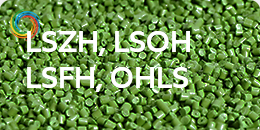
In an increasingly safety-conscious world, low smoke zero halogen material has emerged as a critical solution for industries ranging from transportation to telecommunications. As a global leader in polymer innovation, ATP Polymer Technology has positioned itself at the forefront of LSZH development, delivering products that meet the highest standards of fire safety, environmental responsibility, and performance reliability.
Unlike traditional halogenated materials like PVC, LSZH compounds are designed to minimize hazardous emissions during combustion. When exposed to fire, PVC releases dense smoke and corrosive hydrogen chloride gas, creating life-threatening conditions and damaging sensitive electronic equipment. In contrast, LSZH materials from ATP are formulated to:
Emit up to 90% less smoke, ensuring visibility during emergencies.
Produce no toxic halogen-based gases, protecting both human health and infrastructure.
Maintain structural integrity longer to support critical systems like emergency lighting.
This makes LSZH indispensable for confined spaces such as tunnels, hospitals, and data centers, where evacuation and equipment protection are paramount.
To understand why industries are shifting toward LSZH, consider the following performance comparison:
Property | Traditional PVC/Halogenated Materials | ATP LSZH Materials |
Smoke Density | High, obscuring visibility | Up to 90% less smoke |
Toxicity | Releases HCl, dioxins | Zero halogen emissions |
Flame Retardancy | Often requires additives | Inherently flame-retardant |
Compliance | Banned in many rail & infrastructure projects | Meets CPR, GB31247, CNAS |
Long-Term Reliability | Corrodes equipment over time | Non-corrosive, protects electronics & structures |
This table highlights why LSZH is becoming the mandatory choice for rail transit, 5G cabling, and aerospace applications—industries where safety and reliability cannot be compromised.
ATP's leadership in LSZH technology is backed by a CNAS-certified laboratory and a team of polymer experts from top Chinese research institutions. Their 12,000-ton annual production capacity supports diverse industries, including:
Transportation: Fire-resistant cables for rail transit and electric vehicles.
Telecom & Energy: Flame-retardant insulation for 5G and smart grid wiring.
Healthcare & Electronics: Non-toxic materials for medical devices & wearables.
ATP's LSZH formulas undergo rigorous EU CPR and GB31247-compliant testing, ensuring they outperform conventional polymers in flame spread resistance and low toxicity.
The move toward LSZH is not just about compliance—it's about future-proofing infrastructure. ATP's clients in military aerospace, robotics, and smart buildings rely on their LSZH materials because:
Regulatory readiness: Pre-certified for global fire safety standards.
Performance durability: Resists heat, chemicals, and mechanical stress.
Sustainability: Halogen-free compositions align with green manufacturing trends.
A prime example is the rail sector, where ATP's LSZH cables are replacing PVC en masse to meet strict tunnel fire safety codes in Europe and Asia.
As global regulations tighten and industries prioritize human safety and asset protection, LSZH materials are transitioning from niche to necessity. ATP Polymer Technology's cutting-edge formulations and vertically integrated R&D ensure they remain at the vanguard of this shift, delivering LSZH solutions that are safer, smarter, and sustainable.