Modern rail networks—including metros, high-speed trains, and urban trams—demand high-performance, fire-safe cable materials to ensure passenger safety and uninterrupted operation. LSZH (Low Smoke Zero Halogen) materials, developed by ATP Polymer Technology, have become the material of choice for rail transit cables, offering superior flame retardancy, minimal smoke emission, and zero toxic gas release in case of fire. Unlike conventional PVC or halogenated compounds, LSZH for Rail Transit Cables complies with strict international standards such as EN 45545-2, BS 6853, and NFPA 130, making it indispensable for underground tunnels, train interiors, and critical control systems.
Unmatched Fire Safety Performance
When traditional cables burn, they release thick smoke and corrosive halogen gases, severely impairing visibility and causing respiratory hazards. LSZH compounds eliminate these risks by:
Emitting <60% smoke density (compared to >600% for PVC).
Generating zero hydrochloric acid or other toxic fumes.
Achieving V-0 flame retardancy (UL94 standard).
Compliance with Stringent Rail Industry Standards
ATP Polymer's LSZH for Rail Transit Cables meets or exceeds:
EN 45545-2 (Europe's rail fire safety standard).
BS 6853 (UK standard for fire resistance in trains).
NFPA 130 (US fire protection for transit systems).
GB/T 19666 (China's flame-retardant cable requirements).
Long-Term Durability in Harsh Rail Environments
Railway cables are subjected to:
Vibration and mechanical stress from moving trains.
Wide temperature fluctuations (from -40°C to 90°C).
Moisture, oil, and chemical exposure.
ATP's LSZH formulations provide exceptional abrasion resistance, flexibility, and UV stability, ensuring decades of reliable performance.

Cable Type | Application | Why LSZH is Required |
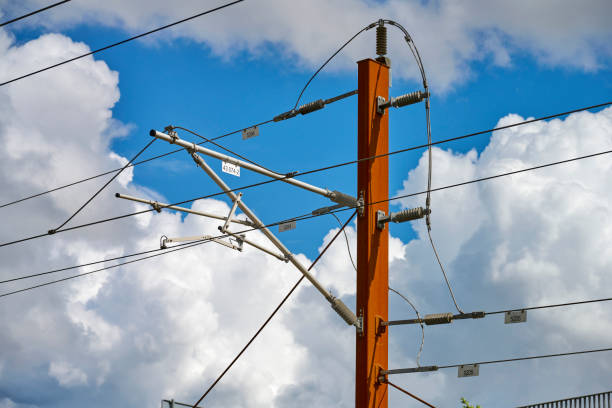
Power Distribution | Overhead lines, third rail systems | Flame resistance, minimal smoke |
Control & Signaling | Train braking, door systems, automation | Safety in tunnels, low toxicity |
Communication Data | CCTV, Wi-Fi, onboard entertainment | Prevents signal interference, lightweight |
Interior Wiring | Lighting, HVAC, emergency systems | Non-toxic, passenger safety compliance |
Underground Metro | Tunnel power, emergency lighting | Critical for evacuation visibility |
Property | PVC | Halogen-Free PE | LSZH (ATP’s Formula) |
Smoke Density (Ds Max) | >600 (Severe hazard) | 100–200 | <60 (Ultra-low) |
Toxicity (Acid Gas pH) | <3.0 (Corrosive) | >4.0 | >4.5 (Safe) |
Flame Retardancy (UL94) | V-2 / HB | V-1 to V-0 | V-0 (Best Rating) |
Operating Temp. Range (°C) | -20 to 70 | -30 to 90 | -40 to 105 |
Compliance Standards | Basic fire tests | Regional rail specs | EN 45545-2, NFPA 130, BS 6853 |
ATP's LSZH for Rail Transit Cables clearly outperforms traditional materials in safety, durability, and regulatory compliance.
As a CNAS-certified manufacturer with 12,000-ton annual capacity, ATP delivers cutting-edge LSZH solutions featuring:
Nanocomposite-enhanced LSZH – Higher mechanical strength and flame resistance.
Low-smoke, zero-halogen grades – Certified for global rail safety regulations.
Custom formulations – Optimized for flexibility, oil resistance, and long-term reliability.
By choosing ATP's LSZH for Rail Transit Cables, rail operators gain:
Enhanced passenger safety.
Lower maintenance costs (due to superior aging resistance).
Compliance with strict international fire standards.
With the global expansion of metro and high-speed rail networks, fire safety regulations continue to tighten. LSZH for Rail Transit Cables, pioneered by ATP Polymer Technology, provides the optimal balance of performance, safety, and environmental responsibility—ensuring reliable, hazard-free rail operations for decades. By adopting LSZH cables, rail engineers can future-proof their systems while protecting passengers and infrastructure.